Posts

RIP Stephen Sondheim

Image
For the first fifty or so years of my life I somehow managed to avoid knowing anything about Stephen Sondheim. Probably because I have an almost pathological dislike of musicals -- so if I'd heard anything about him at all, I'm afraid to say he would just have got lumped into the waste-basket of slushy, mawkish and soppy-ending trash that, based first on painful childhood experience and then on adult preference, I generally associate with the genre.  Things changed when I found myself making a travel documentary one day with Amon Miyamoto, Japan's premier musical director. "Found myself" because it wasn't planned -- I'd been asked to set up and coordinate a shoot in the UK without knowing until the last minute who the presenter was going to be. So it was quite a shock when I found out who he was and what he did. But despite my initial concern that we might not hit it off too well, we got on like a house on fire: I still remember that week as one of the hig...
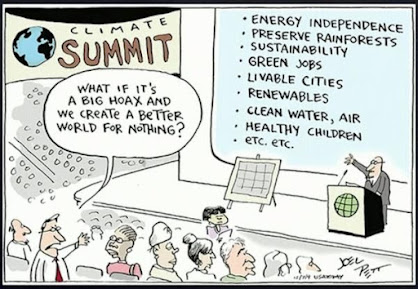
COP26: Just a load of hot air?

Image
It's easy to be cynical about the promises being made at COP26 in Glasgow. We've heard it all before: promises are made, only to be broken. Cut methane emissions by 30%? Sure, we'll do that. End deforestation by 2030? No problem. But here's the thing: however frustrating the process may be, an agreement is still better than no agreement.  That's because words do matter. Language is all about agreement, after all. There's nothing about the actual sounds of the words we use -- or the shapes of the letters we use to write them -- that has any meaning in itself. It's only because we all agree that certain combinations of sounds and shapes have particular meanings that we're able to understand each other in the first place. It's the basis of everything that makes us human, the secret of our civilisation. So when we use words to express a commitment, we're leveraging the fundamental nature of language.  And we all understand how important that is: in e...

Guy Fawkes Night: Bonfire of Insanities

Image
It's easy to forget exactly what we're celebrating on November 5th, when we so enthusiastically loose off fireworks all around the UK. In most countries, fireworks are used to mark some significant political, cultural or social occasion -- the founding of the nation, the end of  period of fasting, or the start of the New Year. But here in Britain our most extravagant displays are reserved for a day which commemorates a failed terrorist plot -- over 400 years after it was foiled. It's almost as if people in the 25th century were still celebrating the death of Bin Laden. In some ways, that makes sense. It's a celebration of stability over chaos. If Guy Fawkes had succeeded in blowing up Parliament, killing the King and the people who ran the country, England would have descended (yet again) into a period of political mayhem. But less than 40 years after Guy Fawkes and his fellow conspirators were hung, drawn and quartered, the country did just that anyway: the battle line...

Why the Halloween meme left Guy Fawkes standing

Image
When I was a kid, back in the 1960s, Halloween wasn't a thing. At least not in the UK: what we all looked forward to was November the 5th, Guy Fawkes night, when we got to have a big bonfire and loose off some fireworks -- and maybe a limp barbecue afterwards that mostly consisted of jacket potatoes. We had little idea what the Gunpowder Plot was all about, or why we were remembering it. It was something that had happened so long ago it had no relevance to our young lives -- and like most such things, even Xmas, had long lost any historical meaning: it was simply an excuse for a celebration. But by the time our children were old enough to get involved, the Guy Fawkes meme was all but over. People did still have Bonfire Night, but the energy and passion we'd put into making and dressing a guy, and collecting money for fireworks, had all been transferred to getting dressed up for Halloween -- and even the adults were getting involved. Why? You could put it down to the influence o...

Lost In Words: How language distracts us

Image
We've all seen them. People walking down the street apparently talking to themselves, oblivious to their surroundings, gesticulating and grimacing as they go. They may look mad, but they're simply on the phone: and though we can see them, they usually can't see us -- in their conscious minds they're somewhere else, lost in an imaginary space with their memories or impressions of the person they're talking to, though they may not even know where that person is. It's a stark and powerful demonstration of just how effective language is at isolating us from reality.    It happens all the time of course. It's happening to you now. As you read these words you're no longer at your desk, in the tube, on the loo, or wherever else you may find yourself as you access social media. You're with me in your mind -- even though you may have never met me -- because there's something about my words that has attracted you. That's what language does -- it gives ...

Why 'Memes over Genes': TLDR version

Image
We all know about genes, don't we. They're the 'units of hereditary': the biological building blocks of our genome, signature sequences of DNA that get passed on to our children, if we have any -- or die with us if we don't. It's the same for all living things. What drives evolution is the random element of the sexual shuffle: useful new characteristics survive, others are not so lucky. But here's the thing: what most makes us human is that -- above and beyond this slow genetic churn -- we swim in an extraordinary pool of abstract ideas, ideas we absorb and pass on whenever we find them interesting. It was this pool of shared ideas that Richard Dawkins was thinking about when he coined the word 'meme' in his book The Selfish Gene  to mean 'a unit of cultural transmission': memes are the building blocks of culture. These days memes are all about video clips of cats doing weird stuff, or the latest buzz-word doing the rounds, but that's jus...

Auditioning for an audiobook

Image
Just spent a fascinating few days listening to auditions sent in by prospective narrators for an audiobook version of my book SPEECH! How Language Made Us Human  -- which I hope will be released in mid-December (just in time for Xmas 😉). I've not done this before, and was astonished both at the range of voices sent in and the very different ways they chose to read the script I'd chosen for the audition -- the introduction to the book. As a writer, you inevitably hear your own voice as you write, so it's a rather odd experience to hear your words being read aloud not just in another voice, but even in a different persona. It must be even more extraordinary for a playwright or a scriptwriter, as their words are not only translated into different voices, but are literally brought to life in ways they may never have imagined.  They say a work of art no longer belongs to the artist once it is finished, because people will interpret it in different ways. It certainly felt like...